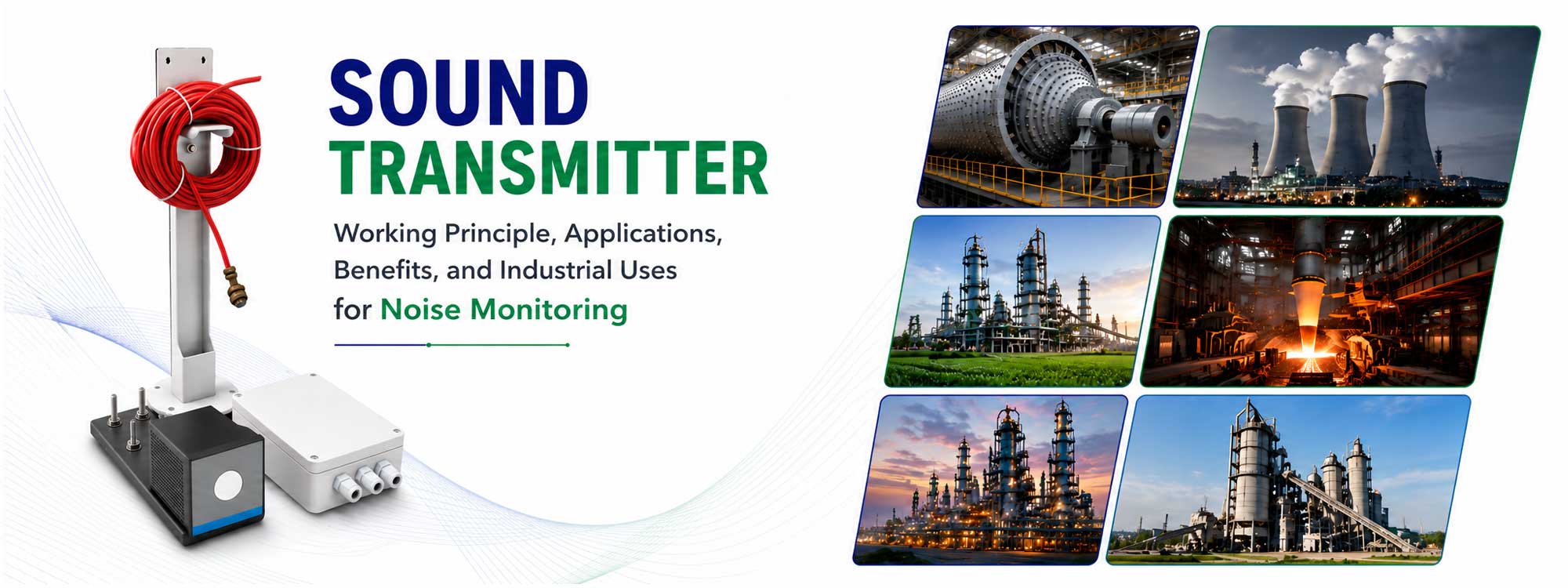
Sound Transmitter: Working Principle, Applications, Benefits, and Industrial Uses for Noise Monitoring
About Us
Pyrotech Technologies Private Limited is a leading provider of industrial automation, monitoring, and control solutions for critical industrial applications. With expertise in industrial electronics, process monitoring, and customised engineering solutions, Pyrotech serves industries including mining, power generation, manufacturing, cement, steel, and infrastructure. Industrial plants use complex machinery such as motors, conveyors, crushers, pumps, and turbines, where sound variations can indicate equipment issues. A Sound Transmitter detects acoustic signals and converts them into electrical outputs for real-time monitoring, noise monitoring, acoustic monitoring, and machine condition monitoring. It helps industries improve predictive maintenance, reduce downtime, and enhance operational reliability.
What is a Sound Transmitter?
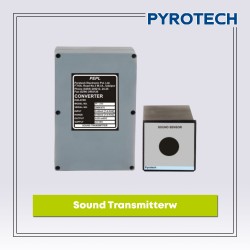
A Sound Transmitter is an industrial device that detects sound variations and converts acoustic signals into standardised electrical outputs such as 4-20mA, voltage signals, or digital communication signals for integration with PLC, SCADA, and industrial automation systems.
It is commonly used for industrial noise monitoring, equipment condition monitoring, acoustic measurement and predictive maintenance applications where continuous sound analysis is required.
Working Principle of Sound Transmitter
The working principle of a Sound Transmitter is based on converting acoustic energy (sound waves) generated by industrial equipment into electrical signals for monitoring and analysis. An integrated microphone or acoustic sensor detects sound variations from machinery and converts them into standard outputs such as 4-20mA, voltage signals, or digital signals for PLC, SCADA, and automation systems. The process involves sound detection, signal conversion, signal processing, and signal transmission. By analysing sound patterns from motors, pumps, compressors, crushers, and conveyors, an industrial sound transmitter supports predictive maintenance, equipment condition monitoring, industrial noise monitoring, and automated monitoring systems.
Applications of Sound Transmitter in Industrial Industries
A Sound Transmitter plays an important role in industries where continuous equipment monitoring, early fault detection, and operational reliability are required. By analysing sound patterns, industries can identify abnormal conditions before they result in major equipment failures.
- Sound Transmitter for Mining and Mineral Processing
- Sound Transmitter for Manufacturing Industries
- Sound Transmitter for Power Plants
- Sound Transmitter for Cement and Steel Industries
- Sound Transmitter for Process Industries
- Sound Transmitter for Industrial Automation
Why Do Industries Prefer Industrial Sound Transmitters?
Industries choose industrial sound transmitters because they provide:
- Continuous monitoring compared to manual inspection
- Early identification of abnormal equipment conditions
- Reliable acoustic measurement
- Integration with existing automation systems
- Improved predictive maintenance capability
By implementing a reliable industrial acoustic monitoring solution, companies can improve equipment availability, reduce maintenance costs, and enhance operational safety.
Benefits of Sound Transmitter for Industrial Noise Monitoring and Equipment Monitoring
A Sound Transmitter provides industries with a reliable solution for continuous acoustic monitoring, equipment condition analysis, and predictive maintenance. Unlike manual inspection methods, an industrial sound transmitter continuously captures sound variations and provides real-time data to identify potential equipment issues.
By integrating sound transmitters, acoustic sensors, and industrial noise monitoring systems, industries can improve operational reliability, reduce maintenance costs, and prevent unexpected equipment failures.
How to Select the Right Sound Transmitter for Industrial Applications?
Choosing the correct Sound Transmitter depends on the industry, equipment type, environmental conditions, and monitoring objectives.
Consider the following factors:
Identify the Monitoring Requirement
Consider the Industrial Environment
- Check Automation Integration Requirements
- Evaluate Accuracy and Reliability
- Select an Application-Specific Solution
Why Choose Pyrotech Acoustic Sensor for Industrial Sound Monitoring?
Selecting the right acoustic sensor is essential for accurate sound measurement, reliable equipment monitoring, and efficient industrial operations. Pyrotech Acoustic Sensors are designed to provide dependable performance in demanding industrial environments where continuous sound monitoring and early fault detection are required.
With expertise in industrial electronics, automation solutions, and process monitoring systems, Pyrotech provides reliable industrial acoustic monitoring solutions for industries including mining, mineral processing, power plants, manufacturing, cement, steel, and process industries.
Frequently Asked Questions (FAQs)
- What is a Sound Transmitter and how does it work?
A Sound Transmitter detects acoustic signals generated by industrial equipment and converts sound variations into electrical outputs such as 4-20mA or digital signals for monitoring and automation systems.
- Why are Sound Transmitters used in industrial applications?
Industrial Sound Transmitters are used for continuous noise monitoring, machine condition monitoring, early fault detection, and predictive maintenance in industries such as mining, power plants, manufacturing, and process industries.
- How does a Sound Transmitter help in predictive maintenance?
A Sound Transmitter identifies abnormal sound patterns from machinery, helping maintenance teams detect potential failures early and reduce unexpected equipment downtime.
- What is the difference between a Sound Sensor and a Sound Transmitter?
A Sound Sensor detects sound signals, while a Sound Transmitter processes and converts sound signals into industrial outputs that can be integrated with PLC, SCADA, and automation systems.
- How can a Sound Transmitter be integrated with PLC and SCADA systems?
Industrial Sound Transmitters with outputs such as 4-20mA, voltage signals, or digital communication interfaces can be directly integrated with PLC and SCADA systems for real-time monitoring and control.
- How do I select the right Sound Transmitter for my industrial application?
The right Sound Transmitter should be selected based on sound measurement range, output requirements, environmental conditions, accuracy, automation compatibility, and the specific industrial application.